

Although everyone has similar memory capacities, some remember more, faster, and more successfully. Memory can be practiced to increase capacity and capabilities for faster learning of facts. The learning process itself consists of encoding, storing, and re-linking, but everyone has their own learning style, and it's important to recognize it so we can tailor our learning to ourselves. For example, we can observe whether we acquire knowledge more quickly through auditory, visual, or experiential methods. The recipe for successful memorization is, of course, a combination of different methods, but also adapting to your own learning style whenever possible.
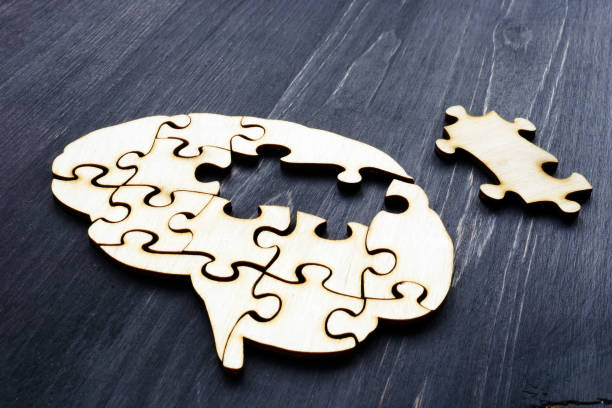
Mnemonics are techniques that make it easier to remember information. A method often used for memorization is the writing method. In this way, we not only remember visually, but we also systematize and group information, thereby enhancing our memory. An additional tip is to group facts according to your own logic and use different colors for different types of data, which falls under the part of memory we call encoding.
For visual types, association through images is key, whether they are real or imaginary. For example, if we are quick to forget people's names as soon as they are introduced, to prevent this we should connect the name with a person we know with the same name, or associate the name with an object, person, or place.
A useful mnemonic technique is called the memory palace. It involves an imaginary journey through a place we know very well. In this technique, each location at that place is used to store a specific piece of information. The person imagines walking through this so-called palace and, with each location within it, remembers a specific piece of information in a particular order. This way, the person can more easily recall the information, since they associate it with a specific part of the chosen location.
One of the memory techniques that does not rely on visual or auditory stimuli is the repetition technique. This method of memorization is most successful when facts are remembered one by one, in a way that builds on the previous fact with the next one. So, when a simple fact is memorized, it is repeated, but the next time, a new fact is linked to it—and so on. There are also numerous creative learning and memory techniques, such as mind maps, which serve as outlines of associations and the links between them, or using music and rhyme.
Whichever method works best for us, it needs to be practiced and developed to become a habit and an automatic action for faster memorization.